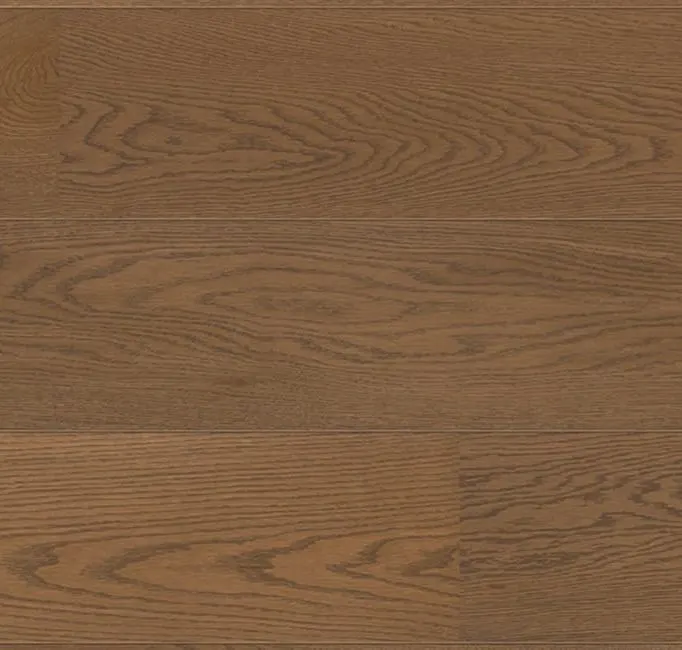
Moisture content of wear layer at time of manufacture may be from 6-9%. Solid Wood Flooring: Relief grooves 3/8 in deep, every 3/4 in across the bottom of the planks. Milling tolerance must meet or exceed NWFA Standards
Material & Finish
Backing
Plywood Substrate, Marine-Grade Baltic Birch
Construction
Solid or Engineered (9-11 Layers)
Content
White Oak
Finish
Prefinished
Format
Modular
Surface Texture
Brushed, Smooth
Wood Grade
Heirloom, Signature, Original
Availability & Procurement
Availability
Unavailable
Country Of Origin
United States
Technical Specifications
Edge End
Softened
Length
12
Overall Thickness
8
Size
12 in x 8 in
Wear Layer Thickness
4 mm
Applications & Usage
Application Filter
Flooring
Installation
Wood subfloors that allow for nailing (at industry prescribed schedule) require at minimum; the use of a caulking gun (such as Wakol MS 265) adhesive bead, applied across the full width of the planks at intervals of 8-12 inches in addition to mechanical fastening. Full-spread wood flooring adhesive applied by trowel to the substrate surface is recommended and will provide the most optimal method of glue-assist. Flooring should be installed in the direction recommended by the Architect or Designer or parallel to the longest wall. Expansion space of at least 1/2 in is required around the perimeter of the installation in each room. Installation using full-spread glue requires the of use appropriate surface weight to properly set the individual board into the adhesive. Adhesive transfer of 95% or more to the bottom of the plank is required and must retain contact with the adhesive and substrate once dry and cured. 5 gallon buckets filled with sand or water are most commonly used for this purpose. Depending on adhesive requirement weights can typically be redistributed after 20 minutes. Depending on subfloor conditions and nature of the adhesive the use of shims may be required to ensure flush edge and end joint configuration
Sustainability
Human Health
Human Health Impact
MAS Certified Green, Formaldehyde Free, Low Emitting/Low VOC, CDPH Standard Method v1.2-2017